Promo code APP3 – € 3 discount on your first order in app
  Free delivery for orders over € 49


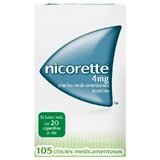
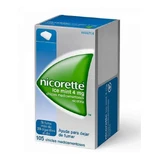
Nicorette Ice Mint 4 Mg 30 chewing gums
Description
Action and mechanism
- [ANTI-SMOKING], [GANGLIOPLEGIC]. Nicotine is an agonist of nicotinic cholinergic receptors, located primarily in the autonomic ganglia, adrenal medulla, neuromuscular junction, and central nervous system. The effects of nicotine on the body are numerous and varied, and depend on the administered dose and the individual's autonomic tone.
Nicotine is also responsible for tobacco dependence in smokers, possibly through two mechanisms. At low doses, it appears to have a stimulating effect on the cortex via the locus coeruleus, increasing cognitive function and alertness. At higher doses, it seems to produce a "reward effect" originating in the limbic system.
Abrupt cessation of tobacco use after a prolonged period leads to a characteristic withdrawal syndrome, which includes symptoms such as dysphoria, insomnia, irritability, anger, anxiety, difficulty concentrating, agitation, bradycardia, and increased appetite with weight gain. Nicotine cravings are also common.
Administering nicotine through patches or gum produces effects similar to those obtained from tobacco, providing those wishing to quit smoking with enough nicotine to reduce withdrawal symptoms. The nicotine dose is gradually reduced until the body can function without it.
Pharmacokinetics
Oral, transdermal, nasal routes:
- Absorption:
* Chewing gum: Chewing gum releases the drug evenly during chewing. The released nicotine is absorbed very quickly. Some is swallowed with saliva, but it has very low bioavailability because it is partially inactivated in the stomach and intestines and undergoes extensive first-pass metabolism in the liver. Very little nicotine is released from chewing gum if it is swallowed.
Nicotine release is highly variable (45-90% at 20-30 minutes) and depends on the intensity and duration of chewing the gum. After administering a 2 mg piece of gum, a Cmax of 6.4 ng/ml is reached after 25-30 minutes. These levels are 2-5 times lower than those obtained after smoking a cigarette.
- Distribution: It binds poorly to plasma proteins (5%). Its Vd when administered intravenously is approximately 2-3 L/kg. Nicotine crosses the blood-brain barrier and the placenta. It is excreted in breast milk.
- Metabolism: Nicotine is extensively metabolized in the liver, and to a lesser extent in the lungs and kidneys, very rapidly, resulting in more than 20 metabolites, which are less active than the original molecule. The main metabolite is cotinine, which appears in plasma concentrations 10 times higher than nicotine.
- Elimination: Nicotine is eliminated by hepatic metabolism and subsequent urinary excretion of metabolites. Up to 10% of the dose is recovered unchanged in urine, although if the urinary pH is below 5, up to 30% can be recovered. The half-life of nicotine when administered artificially is 1-3 hours, compared to 15-20 hours for nicotine from tobacco. The clearance rate is approximately 70 L/hour.
Pharmacokinetics in special situations:
- Elderly: In healthy elderly patients there is a slight decrease in nicotine clearance, but this does not justify readjusting the dosage.
- Renal insufficiency: In patients with renal insufficiency, an increase in plasma nicotine levels is observed depending on the degree of renal function.
- Hepatic impairment: The pharmacokinetics of nicotine are not affected in patients with mild hepatic impairment (Child-Pugh score of 5), while Cl is decreased in cirrhotic patients with moderate hepatic impairment (Child-Pugh score of 7).
Instructions
- [TOBACCO DEPENDENCE]. Adjuvant treatment in smoking cessation programs, with the aim of relieving the symptoms of nicotine withdrawal syndrome.
Although these products mimic the effects of tobacco, they should never be used as substitutes for tobacco.
Posology
- Adults, oral:
* Chewing gum: The characteristics of chewing gum as a pharmaceutical form are such that they can lead to different individual levels of nicotine in the blood. Therefore, the dosage frequency should be adjusted according to individual requirements within the established maximum limit.
The dosage will depend on the level of dependence and the number of cigarettes smoked. It is recommended to start with 2 mg gum, using one piece whenever the patient feels the urge to smoke. If 15 pieces of gum are insufficient, or if more than 20 cigarettes are smoked per day, single doses of 4 mg will be administered.
The daily dose is usually between 8 and 12 pieces of gum, up to a maximum of 25 pieces. During the initial phase of withdrawal, it is recommended not to exceed 15 pieces of gum per day.
The duration of treatment also varies, although it should be followed for at least 3 months. After this period, the user should gradually reduce the number of pieces of gum chewed daily. Abruptly stopping the gum is not advisable, as the patient may relapse. Once the patient has reduced the dose to 1 or 2 pieces per day, treatment can be discontinued.
2 mg gum may not be sufficient for patients with strong or very strong dependence, such as patients who smoke more than 20 cigarettes a day or who have previously failed to quit smoking using nicotine replacement therapy.
- Children: Safety and efficacy have not been evaluated in children and adolescents under 18 years of age.
Duration of treatment: The use of this product for periods longer than 6 months is not recommended, although certain patients may require longer treatment periods.
Guidelines for proper administration
The patient must stop smoking completely during nicotine therapy due to the risk of adverse reactions to nicotine from the increased plasma nicotine levels. Combining patches with gum or lozenges is not recommended.
Consuming acidic drinks like coffee or soda at the same time can reduce the release of nicotine from gum or lozenges. It is recommended to avoid consuming these beverages for 15 minutes before taking nicotine.
- Chewing gum: Chew the gum gently and slowly, pausing for several seconds between chews, as chewing too quickly can lead to rapid nicotine absorption and adverse reactions. Continue chewing until the flavor becomes intense or a tingling sensation is felt. Then place the gum between the gum and the back of the mouth. As the flavor diminishes, chew the gum again. Repeat this routine for 30 minutes.
Contraindications
- Hypersensitivity to any component of the medication.
- Non-smokers or occasional smokers.
Precautions
- [RENAL IMPAIRMENT]. Nicotine and its metabolites are eliminated in the urine, so decreased renal function could lead to their accumulation. Because the metabolites are also active, adverse reactions could occur. No significant differences in the incidence of adverse reactions have been reported in patients with mild or moderate renal impairment (creatinine clearance between 30-90 ml/minute), but close monitoring of these patients is recommended. Safety and efficacy have not been evaluated in patients with severe renal impairment (creatinine clearance less than 30 ml/minute), therefore its use is not recommended (See Contraindications).
- [HEPATIC INSUFFICIENCY]. Nicotine is extensively metabolized in the liver, so in cases of hepatic insufficiency, accumulation of nicotine may occur. Extreme caution is advised in patients with mild or moderate hepatic insufficiency, monitoring for the possible appearance of adverse reactions. Safety and efficacy have not been evaluated in patients with severe hepatic insufficiency; therefore, its use is not recommended (See Contraindications).
[HEART DISEASE]. Nicotine has cardiac stimulant and vasoconstrictor effects, which can worsen cardiovascular conditions. Occasionally, cases of adverse cardiovascular reactions with nicotine have been reported. However, oral or transdermal nicotine administration does not appear to be associated with a particularly significant risk of cardiovascular events. Patients with heart disease should be advised to quit smoking, ideally without nicotine replacement therapy. However, if this is not possible, it is recommended to carefully assess the need for treatment, weighing the benefits and risks, and to exercise extreme caution in patients with heart failure, ischemic heart disease such as recent acute myocardial infarction or angina pectoris, cardiac arrhythmia, stroke, and vasospastic diseases such as thromboangiitis obliterans, Prinzmetal's angina, or Raynaud's disease. Likewise, special caution is advised in patients with high blood pressure, as nicotine may increase blood pressure. If the patient experiences a worsening of any of these symptoms, it is recommended to discontinue treatment (see Contraindications).
- [PHEOCHROMOCYTOMA], [HYPERTHYROIDISM], or any condition that may be worsened by catecholamines, such as [TYPE 1 DIABETES MELLITUS]. Nicotine stimulates the production and release of catecholamines in the adrenal medulla. This can lead to a worsening of symptoms such as pheochromocytoma, hyperthyroidism, or diabetes. In general, nicotine replacement therapy presents fewer risks than continuing to smoke, but it is recommended to assess the benefit-risk ratio beforehand in these patients.
- [PEPTIC ULCER] and other inflammatory processes of the stomach, such as [GASTRITIS]. Nicotine delays the healing of gastroduodenal ulcers, so its use in these patients is recommended only if the benefits outweigh the potential risks.
- Dependence. Any nicotine preparation carries a risk of dependence, although due to the lower plasma levels achieved, it is less likely than with tobacco itself. However, abrupt withdrawal of treatment can lead to a withdrawal syndrome similar to that experienced when quitting smoking. For this reason, it is recommended to gradually discontinue nicotine administration and not to stop treatment until there is reasonable certainty that a withdrawal syndrome will not occur.
- [HYPERSENSITIVITY REACTIONS]. Caution in patients susceptible to developing [ANGIOEDEMA] or [URTICARIA].
- Inflammation of the upper digestive tract, such as esophagitis or pharyngitis. Nicotine can exacerbate these conditions.
- Patients with dentures or any chewing impairment may have problems chewing gum, so it is recommended to use other forms of administration such as patches.
Warnings about excipients:
This medicine contains sodium salts. For the exact sodium content, please refer to the composition. Oral and parenteral dosage forms with sodium amounts exceeding 1 mmol (23 mg)/maximum daily dose should be used with caution in patients on sodium-restricted diets.
Warnings about excipients:
- Because it contains butylhydroxytoluene as an excipient, it may produce local skin reactions, such as contact dermatitis, or irritation of the eyes or mucous membranes.
Advice to the patient
- It is advisable to reduce the doses gradually, to avoid a relapse.
- Nicotine-based preparations can cause dependence.
- It is advisable to notify the doctor of any overdose symptoms such as nausea, vomiting, diarrhea, dizziness, weakness or palpitations.
- If chest pain occurs, it is recommended to stop treatment and see a doctor.
- Smoking should not be done during treatment, nor should chewing gum or tablets be combined with patches.
- If nicotine is administered to breastfeeding women, it should be done at least two hours before breastfeeding the child.
- Treatment periods longer than 6 months are not recommended.
- The medication should not be left where it can be misused, handled or ingested by children, as it can produce severe toxicity that can be fatal.
- Chewing gum should be chewed slowly to avoid too rapid an absorption of nicotine.
- Treatment should be discontinued if oral problems, persistent indigestion, or severe sore throat occur.
- Before chewing gum, it is recommended to wait at least 15 minutes if you have previously ingested coffee or other acidic drinks.
- It is recommended not to administer more than 25 pieces of gum per day, and no more than 15 pieces of gum at the start of treatment.
- Professional advice may be enough to help smokers quit smoking.
- The duration of treatment and the necessary dosage depend on the person's dependence, although treatment of at least 3 months is usually required.
- It is recommended to assess the benefit-risk ratio in patients with cardiovascular problems before starting treatment.
Interactions
Tobacco smoke appears to act as an enzyme inducer, likely due to the polycyclic aromatic hydrocarbons in the smoke, generated during the partial combustion of plant fiber, and perhaps to nicotine. By inducing metabolism, primarily of the cytochrome P450 isoenzyme CYP1A2, a decrease in the pharmacological effects of drugs can occur. Similarly, when smoking is discontinued, plasma concentrations of drugs metabolized via this pathway can increase, which may occasionally lead to toxic effects. It may therefore be necessary to readjust the dosage of drugs such as oral anticoagulants, benzodiazepines that are metabolized in the liver, caffeine, chlorpromazine, dextropropoxyphene, estrogens, phenacetin, phenazone, flecainide, fluphenazine, haloperidol, imipramine, lidocaine, olanzapine, pentazocine, ritonavir or theophylline.
Other reported effects of smoking include reduced diuretic response to furosemide, modification of the pharmacological effect of propranolol, and altered response rates in ulcer healing with H2 antagonists.
In diabetic smokers, there is a possibility of a decrease in the antidiabetic effect of insulin, likely due to increased catecholamine levels, which counteract its hypoglycemic action, and impaired subcutaneous insulin absorption due to peripheral vasoconstriction. Smokers typically require a 15-30% higher insulin dose to control their blood glucose levels. Upon quitting smoking, a reduction in the insulin dose is usually necessary.
These enzyme-inducing effects have not been observed when nicotine is administered in the form of smoking cessation preparations, so a dosage adjustment of these drugs may be necessary.
Nicotine may interact with the following drugs:
- Adrenergic agonists and antagonists. Nicotine stimulates the adrenal production of cortisol and catecholamines, which can modify the effects of adrenergic drugs. Similarly, administering a vasoconstrictor drug, such as an adrenergic agonist, or a vasodilator, such as a beta-blocker, can alter the transdermal absorption of nicotine.
- Bupropion. The efficacy and safety of combining bupropion with nicotine have not been studied. In fact, nicotine use was an exclusion criterion in the first clinical trials conducted with bupropion. The manufacturers of this drug have described a possible increased risk of hypertension, with a rate of 6.1% compared to 2.5% for bupropion alone.
However, limited clinical data suggest that combining bupropion with nicotine patches may lead to better smoking cessation outcomes. If nicotine patches are combined with bupropion tablets, weekly blood pressure monitoring is recommended due to the risk of hypertensive crisis.
Pregnancy
FDA Pregnancy Category D. In monkey studies, intravenous bolus administration of 2 mg/kg of nicotine resulted in fetal acidosis, hypoxia, hypercapnia, and hypotension. Uterine blood flow was reduced by 30% with an infusion of 0.1 µg/kg/minute.
Smoking during the last trimester of pregnancy can cause fetal harm, such as growth retardation, increased risk of miscarriage, and increased perinatal mortality, although its teratogenic potential has not been clearly established. It has also been shown that tobacco can reduce fetal respiratory movements. These effects have also been observed with nicotine gum.
Therefore, pregnant women should be advised to quit smoking completely before the third trimester of pregnancy. Due to the inherent risks associated with nicotine replacement therapy, it is recommended that educational and behavioral programs be used before starting this treatment.
However, in pregnant women with high nicotine dependence, nicotine replacement therapy may be necessary. This therapy presents fewer risks than smoking, since plasma nicotine concentrations are lower and there is no exposure to polycyclic aromatic hydrocarbons or carbon monoxide.
Quitting smoking, with or without nicotine replacement therapy, should not be undertaken individually by the patient, but as part of a medically supervised smoking cessation program.
In the third trimester, nicotine has hemodynamic effects, such as changes in fetal heart rate, which can affect the fetus near delivery. Therefore, after the sixth month of pregnancy, nicotine should only be used by pregnant smokers who have not been able to quit smoking by the third trimester, and always under medical supervision.
Lactation
Nicotine and its metabolites are excreted in breast milk for up to two hours after the last cigarette. Levels in breast milk are 2.9 times higher than those in plasma. It's important to note that the amount of nicotine present in breast milk is lower in women using nicotine replacement therapy than in smokers. Nicotine can be absorbed orally by infants to a greater extent than by adults due to the immaturity of their hepatic metabolic mechanisms and the resulting reduction in the first-pass effect.
Breastfeeding mothers should be advised not to smoke or use nicotine to quit. However, in patients with severe nicotine dependence who have not been able to quit smoking, the risk to the infant from nicotine use should be assessed and compared with the risk of tobacco exposure.
If formula replacement therapy is used, it is recommended to use only the gum or tablets, and to administer them after breastfeeding the baby. At least two hours should pass before breastfeeding the baby again.
A pregnant woman should never start a nicotine smoking cessation program without consulting a doctor.
Children
The safety and efficacy of nicotine preparations in individuals under 18 years of age have not been evaluated, and therefore their use is not recommended. However, due to the potential benefits of smoking cessation and based on the established efficacy of nicotine replacement therapy in adults, some experts recommend that such therapy could be considered for adolescents dependent on nicotine.
Nicotine doses well tolerated by adult smokers during treatment can cause severe and even fatal poisoning symptoms in young children. Patients should be advised that nicotine preparations must be handled with care and not stored or disposed of in a way that children could accidentally use or ingest them.
Seniors
No specific pharmacokinetic studies have been conducted in the elderly, but adverse effects and relapse rates in patients over 60 years of age are similar to those in younger patients. However, heart disease is more common in these patients, and a slight increase in the incidence of fatigue, body aches, and dizziness has been reported.
Adverse reactions
This medication may cause adverse reactions related to the pharmacological effects of nicotine or to withdrawal effects associated with quitting smoking. Certain reported symptoms such as depression, irritability, nervousness, restlessness, mood swings, anxiety, drowsiness, difficulty concentrating, insomnia, and sleep disturbances may be related to withdrawal symptoms associated with quitting smoking.
The most common adverse reactions to the patches occur at the application site, including transient rash, itching, burning, tingling, numbness, swelling, pain, and hives. Most of these topical reactions are minor and resolve quickly upon removal of the patch. Pain or a feeling of heaviness in the limbs or in the area around where the patch is applied (e.g., on the chest) has been reported. Hypersensitivity reactions, including contact dermatitis and allergic reactions, have also been reported. In the event of severe or persistent local reactions at the application site (e.g., severe erythema, pruritus, or edema) or generalized skin reactions (e.g., urticaria or a generalized rash), patients should discontinue use of the patches and consult a doctor. The dose of this medication should be reduced or discontinued if there is a clinically significant increase in cardiovascular effects or other effects attributed to nicotine.
The most common adverse reactions are:
- Digestive: It is normal (20-40%) to experience dyspepsia, nausea, vomiting, or gastric hyperacidity. Less frequent are dry mouth, anorexia, diarrhea, constipation, abdominal pain, flatulence, or hiccups.
Chewing gum can also cause hypersalivation, symptoms of oral inflammation such as stomatitis, glossitis, periodontitis, pharyngitis, esophagitis, and jaw muscle pain due to its high viscosity. These adverse reactions appear at the beginning of treatment and can be reduced with proper chewing technique.
Neurological/psychological. It is common (1-25%) to experience dizziness (3-9%), headache (17-29%), insomnia (3-23%), reduced concentration (1-3%), and irritability. Less frequently (<1%), euphoria, drowsiness, confusion, depression, paresthesia, and seizures have been reported. Dependence syndrome may occur if withdrawal is abrupt or premature.
- Cardiovascular. Cases of hypertension and edema have been reported. Palpitations may occur occasionally (1-0.1%), and cardiac arrhythmia even more rarely (<0.1%). Some cases of acute myocardial infarction, atrial fibrillation, and stroke have been reported in patients treated with nicotine patches. However, a causal relationship with nicotine could not be established.
- Respiratory. Some cases of [COUGH] (3-9%), chest congestion and [DYSPNEA] have been described.
Nicotine administered nasally can cause local irritation, including nasal congestion, sneezing, mucosal irritation, pharyngitis, sinusitis, nosebleeds, conjunctivitis, taste disturbances, and smell disturbances. These effects are very common (94%) at the start of treatment but decrease with continued use.
- Allergic/dermatological. Nicotine can cause [HYPERSENSITIVITY REACTIONS], with itching and erythema, and even [ANGIOEDEMA].
The patches have caused local reactions in some individuals, such as erythema (14-17%), which resolved within 24 hours, localized edema (3-4%), pruritus, a burning sensation at the application site (35-47%), contact dermatitis (2-3%), and vasculitis. In cases of severe adverse reactions, such as dermatitis (1-7%) or generalized dermatological reactions like erythema or severe lesions, it is recommended to discontinue treatment. The administration of topical corticosteroids and/or oral antihistamines has been shown to be effective in reversing these symptoms.
- Musculoskeletal. The patches have occasionally resulted in [MYALGIA] and [MUSCULOSKELETAL PAIN] (3-9%).
- General. Some cases of [PRECORDIAL PAIN], [ASTHENIA], back pain or [EXCESSIVE SWEATING] have been described.
Overdose
Symptoms: Nicotine is a highly toxic substance, and doses of 0.6–0.9 mg/kg can be lethal in humans. However, there is significant interindividual variability, as chronic smokers can tolerate higher doses than children and nonsmokers due to the development of tolerance. In children, even a small dose of nicotine can be dangerous and lead to severe and even fatal symptoms. Therefore, it is recommended that these medications be kept out of the reach of children and that a doctor be consulted immediately if poisoning is suspected.
Despite nicotine's high toxicity, very little data is available on nicotine poisoning. Poisoning can occur if several pieces of gum are chewed at once, several lozenges are sucked, several patches are applied, or if these devices are combined with each other or with tobacco.
If nicotine is ingested, the risk of overdose is low, as it is released slowly in small amounts and is inactivated by a first-pass effect. Furthermore, vomiting usually occurs quickly, preventing further absorption of the nicotine.
In general, nicotine poisoning produces the same symptoms as excessive tobacco use. However, it's important to note that tobacco smoke contains other toxic substances such as tar and carbon monoxide. General symptoms of poisoning include nausea, vomiting, diarrhea, abdominal pain, headache, nervousness, irritability, insomnia, dizziness, rapid heartbeat and palpitations, high or low blood pressure, QT interval prolongation, paleness, muscle weakness, sweating, excessive salivation, burning in the throat, visual and auditory disturbances, and shortness of breath. In more severe cases, lethargy, circulatory collapse, seizures, coma, and death from central or peripheral respiratory paralysis, or occasionally from heart failure, may occur.
Treatment:
- Oral forms: There is no specific antidote for nicotine. Nicotine administration should be discontinued immediately, and traditional measures to promote elimination should be implemented.
If the patient has not vomited previously and is conscious, gastric emptying should be performed promptly by inducing vomiting with ipecac syrup. In comatose patients with seizures or loss of reflexes, gastric lavage with a large-bore tube is recommended. An activated charcoal suspension should then be administered.
Administering a saline or sorbitol laxative may also be helpful to accelerate intestinal transit.
An attempt will be made to keep the individual in a suitable position and warm, in order to maintain normal body temperature.
The symptoms of poisoning should be treated symptomatically. Seizures and excitability can be treated with benzodiazepines, while tachycardia may require a beta-blocker. Bradycardia responds to atropine. Hypotension and vascular collapse should be treated intensively with intravenous fluids or other effective measures.
If necessary, in case of respiratory paralysis, artificial respiration will be initiated.
Features
| Product code | 585998 |
| Category | Anti-smoking, Over-the-Counter medicines (OTC), Useful kits, Focused Ads (IT) |
| Product line | Nicorette |
| Brand | Johnson & Johnson |
| Quantity | 30 |
| Dose | 4 mg |
| Product type | Gum |
Nicorette Ice Mint 4 Mg 30 chewing gums
Nicorette Ice Mint 4 Mg 30 chewing gums
Delivery from Spain

 24 Aug - 2 Sep

 Guaranteed delivery from Spain: 24 August - 2 September
-
€ 23,80Delivery: € 5,99 (free from € 49)
Delivery from Spain:
24 August - 2 September
-
 Pay securely with your preferred payment method













Recently viewed products
















Reviews

Nicorette Ice Mint 4 Mg 30 chewing gums
 Earn € 1 Reward for every review
- For each submitted and approved review you can earn € 1 Reward on your Rewards Credit.
- Rewards are given once for each purchased product you have reviewed.
- You have to be authorised to receive Rewards
All reviews

There are no reviews for this product.










 Description