Promo code APP3 – € 3 discount on your first order in app
  Free delivery for orders over € 49


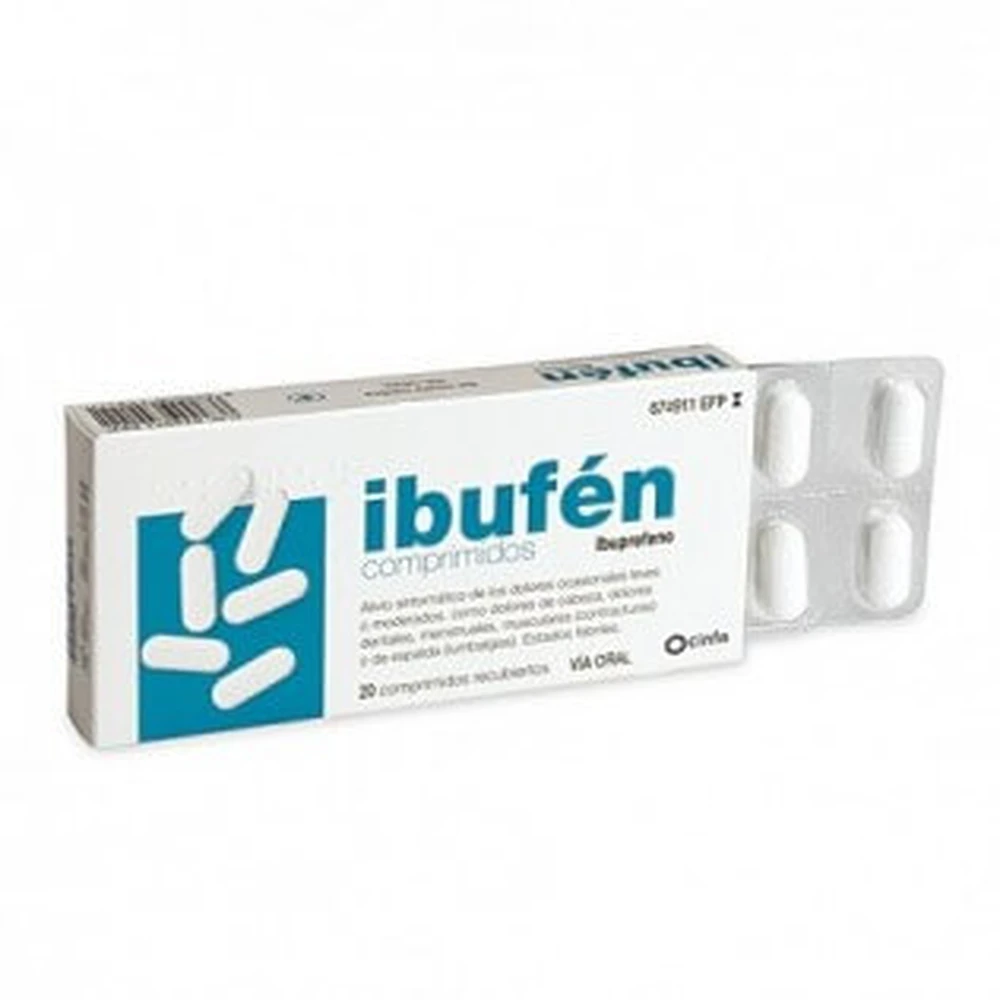
IBUFEN 400 MG 20 COATED TABLETS
Description
ACTION AND MECHANISM
- Analgesic, anti-inflammatory, antipyretic. Ibuprofen is a propionic acid derivative with anti-inflammatory, analgesic, and antipyretic activity. Its mechanisms of action may be due to the inhibition of peripheral prostaglandin synthesis due to its competitive and reversible binding to the enzyme cyclooxygenase, which transforms arachidonic acid into these prostaglandins.
SPECIAL WARNINGS
>> Gastrointestinal risk: NSAIDs are associated with an increased risk of gastrointestinal irritation, ulceration, bleeding, or perforation. Lesions may occur at any time during treatment. Elderly patients are at greater risk of serious gastrointestinal events.
* During prolonged treatment, possible signs and symptoms of ulceration or bleeding should be monitored. A history of esophagitis, gastritis, and/or peptic ulcer should also be investigated to ensure complete healing before starting treatment with an NSAID.
>> Cardiovascular risk: NSAIDs are associated with an increased risk of cardiovascular events, including myocardial infarction and new or worsening hypertension. The risk may increase with duration of treatment, particularly in patients with cardiovascular disease or risk factors for cardiovascular disease.
* Monitor for possible signs of fluid retention (e.g., edema formation), especially in patients with hypertension or heart failure.
SENIORS
Elderly people appear to be more susceptible to the adverse effects of NSAIDs. The risk of developing severe ulcer disease is increased in those over 65 years of age and appears to be dose-dependent. They can also cause fluid retention, potentially leading to cardiovascular complications and reduced efficacy of antihypertensive treatments. It is recommended that they be used with caution, using the lowest possible effective dose.
PATIENT ADVICE
- The patient should inform their doctor if they experience skin rashes, symptoms that could be related to a gastroduodenal ulcer (such as epigastric pain or dark stools), visual disturbances, weight gain, edema, or prolonged headache.
- The patient should notify the doctor if he or she has had any asthmatic reaction while taking this medication.
CONTRAINDICATIONS
- Hypersensitivity to ibuprofen or any component of the medication. Cases of cross-hypersensitivity reactions with other NSAIDs have been reported, so it should not be used in cases of [SALICYLATE ALLERGY] or [NSAID ALLERGY]. These allergic reactions are especially common in patients with asthma, nasal polyps, or who have experienced rhinitis, angioedema, or urticaria when receiving another NSAID or salicylates.
- Active or recurrent [PEPTIC ULCER], active inflammatory bowel disease or any other process that increases the risk of [GASTROINTESTINAL HEMORRHAGE]. Ibuprofen has ulcerogenic effects due to the inhibition of prostaglandin synthesis, which may increase the risk of gastrointestinal bleeding and perforation.
- [COAGULATION DISORDERS]. Ibuprofen has antiplatelet effects, although these effects are less potent and long-lasting than those of aspirin. It may therefore increase bleeding time and should therefore be used with caution in patients with [HEMORRHAGIC DIATHESIS] or active [HEMORRHAGIC DISEASES].
- Perioperative pain in the setting of coronary bypass surgery.
- Severe renal impairment (CLcr < 30 ml/min). Safety and efficacy have not been evaluated; therefore, it is not recommended to use this product.
- Severe hepatic impairment (Child-Pugh class C). Safety and efficacy have not been evaluated, so its use is not recommended.
- Severe heart failure (NYHA class III-IV) or uncontrolled high blood pressure. Fluid retention could worsen these conditions.
- Pregnancy. Its use is contraindicated during the third trimester of pregnancy, and its use for extended periods is not recommended during the first two trimesters.
EFFECTS ON DRIVING
Patients who experience dizziness, vertigo, visual disturbances, or other central nervous system disturbances while taking ibuprofen should refrain from driving or operating machinery. Short courses of treatment generally do not require any special precautions.
PREGNANCY
FDA Category C (quarters 1 and 2); FDA Category D (quarter 3).
Safety in animals : No teratogenic effects have been recorded, but fetal damage has been reported in important cases, as well as disruption of delivery.
Human Safety : There are no adequate and well-controlled studies in humans. Inhibition of fetal prostaglandin synthesis during the first two trimesters of pregnancy has been associated with an increased risk of miscarriage, cardiac malformations (up to 1.5% higher than with placebo), and gastroschisis. The risk appears to increase with high doses and prolonged treatment.
Furthermore, chronic use during the third trimester could theoretically cause premature closure of the fetal ductus arteriosus and fetal renal dysfunction with the risk of oligohydramniosis. Furthermore, due to its antiplatelet effects, bleeding time could be prolonged, with possible fetal harm and risks during delivery. Another possible effect is a reduction or even elimination of uterine contractility, causing an abnormal delay in delivery and an unphysiological prolongation of pregnancy.
It is unknown whether the timely administration of an NSAID could pose a fetal risk.
The use of ibuprofen during the first two trimesters of pregnancy is only acceptable if, in the absence of safer therapeutic alternatives, the benefits outweigh the potential risks. If it must be used, it should be at the lowest possible dose and for the shortest possible duration. The use of an NSAID in the third trimester is contraindicated.
PHARMACOKINETICS
Oral, parenteral:
Ibuprofen acid is a racemic compound, of which the S(+)-enantiomer possesses almost all the pharmacological activity. In vivo, almost 70% of the R(-)-enantiomer of ibuprofen acid is converted to the pharmacologically active S(+)-enantiomer.
- Absorption:
INDICATIONS
- Treatment of mild to moderate [PAIN].
INTERACTIONS
- NSAIDs, including low-dose aspirin: The simultaneous use of more than one NSAID should be avoided due to the risk of adverse effects without increasing therapeutic efficacy. Furthermore, ibuprofen may reduce the antiplatelet efficacy of aspirin when administered concomitantly. If both drugs are necessary, it is advisable to stagger the doses (administer ibuprofen 8 hours before or 30 minutes after aspirin).
- Alcohol: toxicity may be increased.
- Aliskiren: possible reduction of the antihypertensive effect of aliskiren (NSAIDs act on the renin-angiotensin system). In patients with compromised renal function (dehydrated or elderly), this may precipitate deterioration of renal function (possible acute renal failure, usually reversible). Caution should be exercised, especially in the elderly, with monitoring of the antihypertensive effect and renal function.
- Food: Food delays Tmax (from ± 2 h fasting to ± 3 h after food), although this has no effect on the amount absorbed.
- Quinolone antibacterials: There have been isolated reports of seizures that may have been due to concomitant use of quinolones and SOME nonsteroidal anti-inflammatory drugs.
- Oral anticoagulants, heparin: possible increased anticoagulant effect, with risk of bleeding. Periodic monitoring of coagulation indices is recommended.
- Sulfonylurea antidiabetics (chlorpropamide, glibenclamide, tolbutamide): possible increase in hypoglycemic effects by reducing renal excretion.
- SSRI antidepressants (fluoxetine, paroxetine, sertraline, citalopram): possible increased risk of bleeding in general, and gastrointestinal bleeding in particular, especially in the elderly and patients with a history of gastrointestinal bleeding.
- Antihypertensives (ACE inhibitors, Beta-blockers): possible reduction of the antihypertensive effect.
- Oral bisphosphonates (alendronic acid): possible increased risk of esophagitis and gastric ulcer. Cases have been reported with naproxen and alendronate.
- Ciclosporin: the effect of NSAIDs on renal prostaglandins may increase the nephrotoxicity of cyclosporin.
- Antiplatelet agents, including pentoxifylline: There is an increased risk of bleeding in general, and gastrointestinal bleeding in particular. Administer with caution.
- Corticosteroids: Possible increased incidence of gastric discomfort. However, concomitant use with glucocorticoids in the treatment of osteoarthritis may provide additional therapeutic benefit and allow for a reduction in glucocorticoid dosage.
- Digitalis (digoxin): Possible increase in digitalis plasma concentrations (in neonates). There is also a risk of worsening heart failure and decreased kidney function.
- Diuretics (thiazides, high-ceiling diuretics): risk of reduced natriuretic and diuretic effects. May reduce the antihypertensive effect of thiazide diuretics.
- Potassium-sparing diuretics and aldosterone antagonists: possible increased risk of hyperkalemia. Frequent monitoring of serum potassium levels is advised.
- Glitazones (pioglitazone, rosiglitazone): Theoretical risk of increased edema that both glitazones and NSAIDs may cause. Caution should be exercised and monitor for signs of fluid retention and heart failure (swollen ankles, dyspnea).
- Hydralazine: possible decrease in the hypotensive effect.
- Iloprost: possible increased risk of bleeding.
- Lithium salts: possible increase in lithium toxicity due to a reduction in its elimination.
- Methotrexate (administered at doses of 15 mg/week or higher): possible increase in methotrexate plasma levels, with a risk of toxicity, sometimes very severe. The severity depends largely on the methotrexate dose used. The risk of interaction is reduced with low doses of methotrexate, such as those used for psoriasis and rheumatoid arthritis.
- Mifepristone: Nonsteroidal anti-inflammatory drugs should not be administered within 8-12 days of mifepristone administration as they may reduce its effects.
- Paracetamol: Concurrent and prolonged use of paracetamol and NSAIDs may increase the risk of adverse renal effects.
- Pentoxifylline: In patients receiving treatment with ibuprofen in combination with pentoxifylline, the risk of bleeding may increase, so monitoring bleeding time is recommended.
- Potassium supplements: possible increase in potassium levels, with risk of hyperkalemia.
- Ticlopidine: possible increased risk of bleeding.
- Zidovudine: Possible reticulocyte alterations, with severe anemia occurring one week after starting the NSAID. Blood counts should be monitored, especially at the beginning of treatment.
LACTATION
After ingestion of 400 mg of ibuprofen, no detectable concentrations have been found in breast milk, with a detection limit of 0.5-1 mcg/ml. However, the manufacturers advise against use during breastfeeding due to the risk of cyclooxygenase inhibition in the infant.
The American Academy of Pediatrics considers the use of ibuprofen compatible with breastfeeding.
CHILDREN
Safety and efficacy in children under 3 months of age have not been established, so its use is not recommended. Ibuprofen should not be self-administered to children under 12 years of age.
RULES FOR CORRECT ADMINISTRATION
- Tablets and capsules: Swallow with a glass of water.
POSOLOGY
- Adults: 200 mg/4–6 h. If necessary, increase to 400 mg/6–8 h. Maximum dose: 1,200 mg/24 h.
- Children and adolescents < 18 years:
* Adolescents 12 years and older: 200 mg/4-6 h. Maximum dose 1,200 mg/24 h.
* Children 8-12 years: 200 mg/6-8 h. Maximum dose 800 mg/24 h.
* Children < 8 years: use presentations adapted to this age.
- Elderly: may require a dose reduction.
Administration with food : administer with food.
Duration of treatment : consult your doctor and/or pharmacist if symptoms worsen or persist for more than 5 days (pain) or 3 days (fever).
Missed dose : Take the next dose at the usual time. Do not double the next dose.
DOSAGE IN LIVER FAILURE
- Mild to moderate hepatic impairment (Child-Pugh classes A and B): use with caution at the lowest possible dose.
- Severe hepatic impairment (Child-Pugh class C): contraindicated.
DOSAGE IN KIDNEY FAILURE
- Mild to moderate renal impairment (CLcr 30-90 ml/min): use with caution at the lowest possible dose.
- Severe renal impairment (CLcr < 30 ml/min): contraindicated.
PRECAUTIONS
- [RENAL FAILURE]. Ibuprofen is eliminated in urine, so accumulation may occur in cases of renal failure, with a risk of poisoning. Furthermore, it may lead to a decrease in renal blood flow with reversible acute renal failure due to the inhibition of vasodilatory prostaglandin synthesis. Cases of nephrotic syndrome and acute interstitial nephritis have even been reported with prolonged treatment. In patients with mild to moderate renal failure (CLcr between 30 and 90 ml/min), it is recommended to start treatment with a lower dose than in patients with normal renal function, with careful monitoring of the patient. Use in severe renal failure (CLcr < 30 ml/min) is contraindicated (see Contraindications).
- [LIVER FAILURE]. Due to its hepatic metabolism, accumulation and intoxication may occur in the case of hepatic impairment. In patients with mild to moderate impairment (Child-Pugh class A or B), it is recommended to start treatment with a lower dose than that of patients with normal hepatic function, with careful monitoring. Use in severe impairment (Child-Pugh class C) is contraindicated (See Contraindications).
- History of peptic ulcer. The use of NSAIDs, including ibuprofen, has resulted in gastroduodenal ulcers, as well as bleeding and perforation, which can be fatal. The risk of ulcers is increased in high-dose or long-term treatment, in patients with a history of peptic ulcers, especially those with prior gastrointestinal bleeding or perforation, and in the elderly.
As a general rule, it is advisable to administer any NSAID with food to reduce gastric damage. Furthermore, in high-risk groups, it is advisable to start treatment with the lowest possible dose and, whenever possible, to combine an antiulcer drug (H2 antihistamines or pump inhibitors).
These patients, as well as those receiving drugs that may promote bleeding, such as oral anticoagulants or antiplatelet agents, should be closely monitored.
If symptoms of an active ulcer or gastrointestinal bleeding appear, treatment should be discontinued. Similarly, ibuprofen should not be started in people with an active peptic ulcer (see Contraindications).
- [INFLAMMATORY BOWEL DISEASE]. NSAIDs may precipitate symptomatic attacks of diseases such as Crohn's disease or ulcerative colitis, so they are advised to be used with caution and to avoid use in cases of active disease (See Contraindications).
- Cardiovascular effects. NSAIDs may cause fluid retention (especially with prolonged use) due to the inhibition of vasodilatory prostaglandin synthesis, which could lead to the development or worsening of [HIGH PRESSURE], especially in cases where there is no previous treatment or where treatment has not been able to control the disease.
On the other hand, the administration of high doses of ibuprofen (=/> 2,400 mg/24 h) has been associated with an increased risk of arterial thrombosis, similar to that of specific COX-2 inhibitors at therapeutic doses. Therefore, it is recommended to avoid the use of these doses in patients with moderate to severe [HEART FAILURE] (NYHA class II-IV), [ISCHAEMIC HEART DISEASE], [PERIPHERAL ARTERY DISEASE], [STROKE] or [CEREBRAL ISCHAEMIA].
Before starting long-term treatment with ibuprofen, and especially if high doses are required, it would be advisable to evaluate other cardiovascular risk factors such as [DYSLIPIDEMIA], [DIABETES] or [SMOKING].
The use of ibuprofen at reduced doses (1,200 mg/24 h) for a limited period of time does not appear to pose the same cardiovascular risks. Therefore, as with other NSAIDs, the general recommendation is to use it at the lowest dose that controls symptoms and for the shortest possible period of time.
- Skin reactions. The use of NSAIDs has caused very rare, serious but potentially life-threatening adverse reactions, such as exfoliative dermatitis, toxic epidermal necrolysis, or Stevens-Johnson syndrome. These adverse reactions usually begin early, within the first month of treatment. If symptoms of hypersensitivity, mucosal lesions, or skin erythema are observed, treatment should be discontinued.
- Chronic [ASTHMA]. Hypersensitivity reactions with bronchospasm are particularly common in these patients, so extreme caution is recommended. If worsening respiratory function is observed, treatment should be discontinued.
- [ASEPTIC MENINGITIS]. Rare cases of aseptic meningitis have been reported in patients treated with NSAIDs, probably due to a hypersensitivity reaction, although no cross-allergy between NSAIDs has been found. It has been more frequent in patients with [SYSTEMIC LUPUS ERYTHEMATOSUS] and other [COLAGENOSIS], although it has also been reported in some patients who did not suffer from these pathologies. In patients treated with NSAIDs who develop symptoms of meningitis, the possibility of aseptic meningitis should be considered.
- Ibuprofen lysine is contraindicated in cases of infection or suspicion of infection in premature infants.
PRECAUTIONS RELATED TO EXCIPIENTS
- This medicine contains lactose. Patients with hereditary [LACTOSE INTOLERANCE] or galactose intolerance, the Lapp lactase deficiency, or glucose-galactose malabsorption should not take this medicine.
ADVERSE REACTIONS
Adverse reactions are more frequent with doses of 3200 mg/day.
- Gastrointestinal: (>10%): [DYSPEPSIA], [DIARRHEA]. (1-10%): [NAUSEA], [VOMITING], [ABDOMINAL PAIN]. (0.1-1%): [GASTROINTESTINAL HEMORRHAGE], [GASTRIC ULCER], [DUODENAL ULCER], [ORAL THRUSH]. (<0.1%): [INTESTINAL PERFORATION], [FLATULENCE], [CONSTIPATION], [ESOPHAGITIS], [ESOPHAGEAL OBSTRUCTION], exacerbation of diverticular disease, nonspecific hemorrhagic colitis, [ULCERATIVE COLITIS] or [CROHN'S DISEASE], [MELA]. If gastrointestinal bleeding occurs, it may cause anemia and [HEMATEMESIS].
- Dermatological/Hypersensitivity: (1-10%): [EXANTHEMATOUS RASHES]. (0.1-1%): [URTICARIA], [PRURITUS], [PURPURA] (including allergic purpura), [ANGIOEDEMA], [RHINITIS], [BRONCHIAL SPASM]. (<0.1%): [ANAPHYLAXIS]. (<0.01%): [ERYTHEMA MULTIFORME], [TOXIC EPIDERMAL NECROLYSIS], systemic lupus erythematosus, [ALOPECIA], [PHOTOSENSITIVITY REACTIONS], severe skin reactions such as [STEVENS-JOHNSON SYNDROME], [TOXIC EPIDERMAL NECROLYSIS] (Lyell syndrome) and allergic [VASCULITIS].
In most cases where [ASEPTIC MENINGITIS] has been reported with ibuprofen, the patient had some form of autoimmune disease (such as systemic lupus erythematosus or other collagen disorders), which was a risk factor. It manifests as severe headache, nausea, vomiting, fever, neck stiffness, and some clouding of consciousness, possibly due to a hypersensitivity reaction. Increased intrathecal IgG synthesis has been observed, with the presence of immune complexes in the cerebrospinal fluid.
Anaphylactic or anaphylactoid reactions typically occur in patients with a history of hypersensitivity to aspirin and other nonsteroidal anti-inflammatory drugs. This may also occur in patients who have not previously shown hypersensitivity to these drugs.
In the case of a severe generalized hypersensitivity reaction, swelling of the face, tongue and larynx, bronchospasm, asthma, tachycardia, hypotension and shock may occur.
- Central nervous system: (1-10%): [ASTHENIA], [DROWSY], [HEADACHE], [DIZZINESS], [VERTIGO]. (0.1-1%): [INSOMNIA], [ANXIETY]. (<0.1%): [PSYCHOSIS], [NERVOUSNESS], [IRRITABILITY], [DEPRESSION], [CONFUSION] or disorientation reaction.
- Hematological: Bleeding time may be prolonged. Rare cases of hematological disorders observed correspond to [THROMBOCYTOPENIA], [LEUKOPENIA], [GRANULOCYTOPENIA], [PANCYTOPENIA], [AGRANULOCYTOSIS], [APLASIC ANEMIA], [HEMOLYTIC ANEMIA].
- Cardiovascular: Patients with hypertension or kidney disease appear to be more likely to experience [EDEMA]. Hypertension or heart failure may occur (especially in elderly patients).
- Renal: [INCREASE IN UREA NITROGEN] and [INCREASE IN SERUM CREATININE]. In rare cases, NSAIDs may be responsible for [ACUTE RENAL FAILURE], [INTERSTIAL NEPHRITIS], [GLOMERULONEPHRITIS], [RENAL MEDULLARY NECROSIS] or [NEPHROTIC SYNDROME], [PROTEINURIA], [HYPERKALEMIA], [HYPOKALEMIA] and oedema. It has been observed in susceptible patients taking high doses of NSAIDs for prolonged periods. Patients at risk include those with heart, kidney or liver failure, ascites, hyperreninemia, hyperaldosteronemia, shock, sepsis, systemic lupus erythematosus, dehydration, those treated with ACE inhibitors or diuretics and the elderly.
- Liver: In rare cases, [ELEVATED TRANSAMINASES], [HEPATITIS] and [JAUNDICE] have been observed.
- Otological: Rarely, [TINNITUS].
- Ophthalmic: Optical reactions such as [BLURRED VISION], decreased visual acuity or changes in colour perception ([DYSCHROMATOPSIA]) have been observed very rarely after administration of ibuprofen, which resolve spontaneously. Isolated cases of reversible toxic [AMBLIOPIA] have occurred.
- In very rare cases, inflammation associated with infections may worsen.
OVERDOSE
Symptoms : Ibuprofen may cause toxic effects at doses of 80-100 mg/kg, with symptoms appearing after about 4 hours. Mild overdose may cause abdominal pain, nausea and vomiting, headache, drowsiness, lethargy, nystagmus, tinnitus, and ataxia. More serious symptoms occur rarely, although gastrointestinal bleeding, hypotension, hypothermia, metabolic acidosis, seizures, kidney failure, coma, respiratory distress syndrome in adults, and transient apnea in children after ingestion of large amounts may occur.
Treatment : There is no specific antidote.
In mild overdoses of up to 50 mg/kg, which are not expected to cause symptomatic poisoning, water should be administered to mitigate possible gastrointestinal reactions.
In the case of a larger overdose, and if the overdose has occurred less than one hour after the dose, the elimination of unabsorbed ibuprofen should be facilitated by administering activated charcoal and forced emesis. Forced emesis is contraindicated in children who have ingested more than 400 mg/kg due to the risk of seizures and aspiration pneumonia. Gastric lavage is only recommended for overdoses that could be potentially fatal.
If more than one hour has passed since the overdose, symptomatic treatment should be initiated, especially for hypotension, gastrointestinal bleeding, and metabolic acidosis. Forced diuresis with alkalinization of urine may be attempted.
Due to its high plasma protein binding, ibuprofen is not expected to be removed by hemodialysis.
COMPOSITION
IBUPROFEN: 400 MILLIGRAMS
LACTOSE (EXCIPIENT): 95.05 MILLIGRAMS - MONOHYDRATE
Features
| Product code | 506674 |
| Category | Over-the-Counter medicines (OTC) |
| Product line | Ibufen |
| Quantity | 20 |
| Delivery from | Spain |
IBUFEN 400 MG 20 COATED TABLETS
IBUFEN 400 MG 20 COATED TABLETS
Delivery from Spain


Leave your email, and we’ll let you know as soon as it’s back in stock!
Recently viewed products























Reviews

IBUFEN 400 MG 20 COATED TABLETS
 Earn € 1 Reward for every review
- For each submitted and approved review you can earn € 1 Reward on your Rewards Credit.
- Rewards are given once for each purchased product you have reviewed.
- You have to be authorised to receive Rewards
All reviews

There are no reviews for this product.













 Description