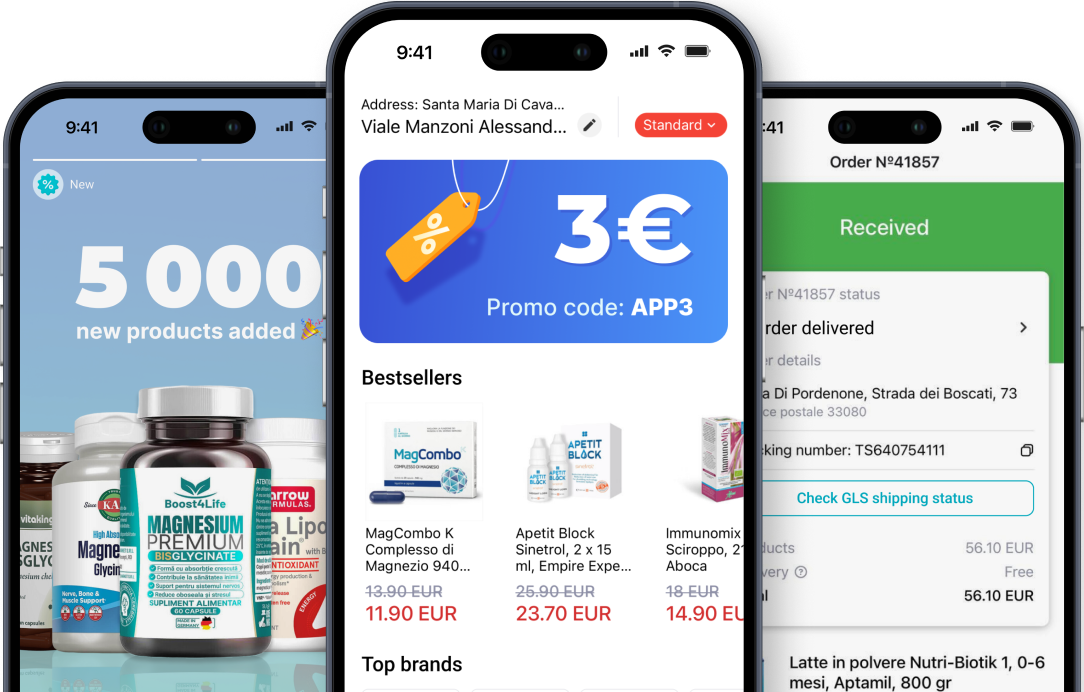
Promo code APP3 – € 3 discount on your first order in app
  Free delivery for orders over € 49


efferaldol-flas-500-mg-16-bucodispersible tablets
Description
ACTION AND MECHANISM
A non-opioid analgesic and antipyretic, combined with vitamin C. Paracetamol peripherally blocks pain impulses through the reversible inhibition of cyclooxygenase, an enzyme involved in prostaglandin synthesis. Its antipyretic effect is due to the inhibition of prostaglandins at the thermoregulatory center located in the hypothalamus. It has demonstrated weak anti-inflammatory properties in some non-rheumatic conditions. In other circumstances, anti-inflammatory action is not expected. At the same dose, the analgesic and antipyretic potency of paracetamol is similar to that of acetylsalicylic acid (aspirin).
SPECIAL WARNINGS
- During prolonged treatment, periodic monitoring of liver function and complete blood counts is recommended. - Although it does not significantly reduce inflammation, very positive effects have been observed in arthritic knee conditions, probably due to its analgesic effect. - Food delays the absorption of paracetamol.
PATIENT ADVICE
- High doses of paracetamol or prolonged treatment without medical supervision can cause liver damage, especially in patients who regularly consume alcoholic beverages. - Do not use this medicine for more than 10 consecutive days without medical supervision. Prolonged treatment or high doses should be taken under a doctor's supervision. - Do not exceed the recommended daily dose (maximum 4 g/day; 2 g/day for alcoholics). - Do not use paracetamol with non-steroidal anti-inflammatory drugs (NSAIDs) without medical advice. - Phenacetin (a metabolite of paracetamol) can darken urine.
CONTRAINDICATIONS
- [PARACETAMOL ALLERGY].
- [HEPATOPATHY] (with or without liver failure), viral [HEPATITIS]: increases the risk of hepatotoxicity.
PREGNANCY
- Paracetamol: the use of short-term therapeutic oral doses is generally accepted at all stages of pregnancy.
- Ascorbic acid: acceptable use at low doses (Caution at high doses).
PHARMACOKINETICS
* Oral route:
- Absorption: rapid and complete after oral administration, with a bioavailability of 75-85%. After a 1000 mg dose, a Cmax of 7.7-17.6 mcg/ml is obtained after 0.5-2 h. It exhibits a significant saturable first-pass effect starting at doses of 2 g.
Effect of food: Food can reduce the rate of absorption of paracetamol, although it does not substantially change the amount absorbed.
- Distribution: After systemic absorption, it is widely distributed throughout most tissues, reaching concentrations similar to those in plasma. Its volume of distribution (Vd) is approximately 1 L/kg. It tends to accumulate particularly in the liver and renal medulla. Distribution is moderately rapid, with a plasma half-life (t1/2) of 1-3 hours, which may be even faster in adolescents. It exhibits low plasma protein binding, around 10%, which can reach 20-40% in patients with acute overdose. It is able to cross the placenta and the blood-brain barrier, with cerebrospinal fluid (CSF) concentrations of 1.5 mcg/ml detected after IV infusion.
- Metabolism: undergoes intense hepatic metabolism (90-95%) through conjugation reactions, primarily with glucuronic acid and sulfate.
The metabolic pathways are saturable at high doses, especially sulfation, which leads to metabolism via alternative pathways involving cytochrome P450 (CYP2E1). These pathways generate hepatotoxic metabolites such as N-acetyl-P-benzoquinone imine (NAPBI), which consumes glutathione during its elimination. NAPBI is subsequently metabolized to cysteine and mercapturic acid.
Enzyme inducing/inhibiting capacity: does not appear to have significant effects.
- Elimination: metabolism and subsequent elimination in urine, primarily as glucuronide conjugates (60-70%), and to a lesser extent as sulfate conjugates (20-30%) and cysteine conjugates (3%). Small amounts are found unchanged in urine (<3%). Its elimination half-life is 1.5-3 hours. A small amount is excreted in bile (2.6%).
Pharmacokinetics in special situations:
- Children: neonates may have a slightly longer t1/2 (4-11 h), while in older children it is similar to that in adults (around 1.5-4.2 h).
- Elderly: may present a slightly longer t1/2.
- Renal insufficiency: elimination may be reduced in patients with end-stage renal failure (ClCr < 10 ml/min).
It is partially removed by hemodialysis, hemoperfusion, and peritoneal dialysis.
- Liver failure: may present a slightly longer t1/2, although the conjugation capacity is not modified.
INDICATIONS
- [PAIN] of mild or moderate intensity.- [FEVER]. Alternative to acetylsalicylic acid in peptic ulcer, treatment with oral anticoagulants and in salicylate allergy.
INTERACTIONS
Paracetamol is metabolized in the liver, producing hepatotoxic metabolites, and therefore can interact with drugs that use the same metabolic pathways. Clinical data on interactions at this level exist with the following drugs:
- Oral anticoagulants (acenocoumarol, warfarin): possible potentiation of the anticoagulant effect, with apparently little clinical relevance; they are considered a therapeutic alternative to salicylates when anticoagulant therapy is already in use. However, the dose and duration of treatment should be as low as possible, with periodic INR monitoring.
- Ethyl alcohol: potentiation of paracetamol toxicity, due to possible induction of hepatic production of hepatotoxic products derived from paracetamol.
- Anticonvulsants (phenytoin, phenobarbital, methylphenobarbital, primidone): decreased bioavailability of paracetamol as well as potentiation of hepatotoxicity in overdose, due to induction of hepatic metabolism.
- Busulfan: Because paracetamol can decrease available glutathione, busulfan clearance may be reduced and its body levels increased. It is recommended to minimize or avoid paracetamol administration before (< 72 hours) or during busulfan treatment.
- Estrogens: decreased plasma levels of paracetamol, with possible inhibition of its effect, due to possible induction of its metabolism.
- Exenatide: The absorption of paracetamol may be reduced by exenatide, as it slows gastric emptying. This interaction can be avoided if the analgesic is administered 1 hour before exenatide.
- Isoniazid: decreased clearance of paracetamol, with possible potentiation of its action and/or toxicity, due to inhibition of its hepatic metabolism.
- Lamotrigine: decrease in the area under the curve (20%) and half-life (15%) of lamotrigine, with possible inhibition of its effect, due to possible induction of its hepatic metabolism.
- Propranolol: increased plasma levels of paracetamol, due to possible inhibition of its hepatic metabolism.
- Rifampicin: increased clearance of paracetamol due to possible induction of its hepatic metabolism.
In addition, there is clinical data on interactions with other mechanisms:
- Anticholinergics (glycopyrronium, propantheline): decreased absorption of paracetamol, with possible inhibition of its effect, due to the decreased speed of gastric emptying.
- Ion exchange resins (cholestyramine): decreased absorption of paracetamol, with possible inhibition of its effect, due to the binding of paracetamol in the intestine.
- Drugs that predispose to nephrolithiasis (acetazolamide, calcium salts, saquinavir, topiramate, triamterene). Concomitant administration could lead to a higher incidence of nephrolithiasis. This combination should be avoided.
LACTATION
Paracetamol is excreted in breast milk in low concentrations. No adverse effects have been reported in newborns following oral administration to the mother, except for one isolated case of an infant with a reversible maculopapular rash on the upper trunk and face.
The safety and efficacy of high-dose vitamin C supplements in breastfeeding mothers have not been evaluated.
CHILDREN
Safety and efficacy have not been established in children under 18 years of age. No data are available in children.
GUIDELINES FOR PROPER ADMINISTRATION
Let the tablet dissolve on the tongue
POSOLOGY
- Adults: 1 tablet every 4 hours. Do not exceed 3 g of paracetamol/day (6 doses/day)
A dosage regimen may also be established for adult patients weighing less than 50 kg, patients with mild or moderate hepatic impairment, chronic alcoholism or chronic malnutrition (low hepatic glutathione reserves) and dehydration, not to exceed 2 g/24 hours
DOSAGE IN HEPATIC INSUFFICIENCY
Do not exceed 2 g/24 hours (4 tablets of 500 mg)
DOSAGE IN RENAL INSUFFICIENCY
FG 10-50 ml/min: 500 mg/6h
FG < 10 ml: 500 mg/8h
PRECAUTIONS
- [CHRONIC ALCOHOLISM]: Chronic alcohol consumption (more than 3-4 drinks/day) may potentiate the liver toxicity of paracetamol. Chronic alcoholics should avoid prolonged treatment or excessive doses of paracetamol (no more than 2 g/day should be administered). An increased incidence of hepatotoxicity and gastrointestinal bleeding has been observed in patients treated with fixed doses of paracetamol plus acetylsalicylic acid.
[ANEMIA]: Due to the possible occurrence of blood disorders such as thrombocytopenia, leukopenia, agranulocytosis, hemolytic anemia, etc., caution is advised in patients with anemia, avoiding prolonged treatment. In these patients, there is a risk that cyanosis may not manifest despite elevated methemoglobin levels.
Prolonged treatments will also be avoided in patients with heart or lung disorders.
- [ANEMIA DUE TO GLUCOSE 6 PHOSPHATE DEHYDROGENASE DEFICIENCY]: cases of hemolysis have been observed.
- In severe renal impairment with creatinine clearance less than 10 ml/min, the interval between doses should be at least 8 hours. In patients with severe or moderate renal impairment, accumulation of conjugated paracetamol derivatives may occur. Prolonged treatment with high doses increases the risk of renal toxicity.
- [SALICYLATE ALLERGY]: Paracetamol, as an analgesic and antipyretic, is a very valid alternative for patients allergic to salicylates. However, bronchospastic reactions have been observed in some asthmatic patients hypersensitive to acetylsalicylic acid or other NSAIDs. Although the incidence of cross-reactivity is low (less than 5%), clinical monitoring is advised in patients allergic to salicylates treated with paracetamol.
- [KIDNEY STONES] and a history of kidney stones. Ascorbic acid can acidify the urine and cause urate crystals to precipitate, which could trigger the formation of kidney stones. Extreme caution should be exercised in patients with this condition.
PRECAUTIONS RELATING TO EXCIPIENTS
This medicine contains aspartame as an excipient. Aspartame contains a source of phenylalanine, which may be harmful to people with phenylketonuria (PKU), a rare genetic disorder in which phenylalanine builds up because the body is unable to eliminate it properly. 10 mg of aspartame is equivalent to 5.61 mg of phenylalanine.
ADVERSE REACTIONS
"ADRs RELATED TO PARACETAMOL"
- Blood disorders: exceptionally, blood disorders, such as [THROMBOCYTOPENIA], [LEUKOPENIA], [PANCYTOPENIA], [NEUTROPENIA], [AGRANULOCYTOSIS] and [HEMOLYTIC ANEMIA] (in patients with G6PD deficiency).
- Dermatological: [SKIN RASHES], [URTICARIA], [ALLERGIC CONTACT DERMATITIS], [FEVER].
- Endocrine/Metabolic: exceptionally, [HYPOGLYCEMIA], especially in children.
- Hepatobiliary: rarely, [JAUNDICE], [INCREASE TRANSAMINASES], [HEPATOTOXICITY] (associated with cases of overdose, either from the ingestion of 1 toxic dose or several doses of excessive doses).
- Genitourinary: may cause [NEPHROPATHY] which in turn may evolve into a state of renal failure, sterile [PYURIA] (cloudy urine), adverse renal effects (with high doses).
- Cardiovascular: rarely, [HYPOTENSION].
"RAMS RELATED TO ASCORBIC ACID"
It does not usually cause adverse reactions, except in particularly sensitive individuals.
- Digestive. The most common symptom is diarrhea, although it usually occurs at high doses, above 1 g for adults and 500 mg for children. This diarrhea could be due to the osmotic effects of ascorbic acid in the intestinal lumen. Nausea, vomiting, gastric hyperacidity, abdominal spasm, and flatulence have also been reported, but these usually occur at doses higher than 1 g.
- Genitourinary. The administration of large amounts of vitamin C has been associated with the production of [KIDNEY STONES], although these have only appeared in individuals with a history of kidney stones.
- Hematological. Cases of [HEMOLYTIC ANEMIA] have been described in patients with glucose-6-phosphate dehydrogenase deficiency, especially in neonates.
ADVERSE REACTIONS RELATED TO EXCIPIENTS
This medicine contains sorbitol. Daily doses above 10 g of sorbitol taken orally may have a mild laxative effect and lead to diarrhea.
OVERDOSE
Symptoms: Paracetamol can cause very serious and potentially fatal poisoning. Toxicity can begin to be experienced from single doses of 6 g in adults or 100 mg/kg in children. Doses above 20-25 g are potentially fatal. Chronic doses above 4 g/24 h can lead to transient hepatotoxicity. However, patients treated with other hepatotoxic drugs, enzyme inducers, or with chronic alcoholism may be more susceptible to its toxic effects, requiring lower doses to produce toxicity.
Hepatotoxicity can occur at paracetamol Cp levels above 120 mcg/ml at 4 h and 30 mcg/ml at 12 h. Levels of 300 mcg/ml at 4 h of overdose have been associated with hepatotoxicity in 90% of patients.
Paracetamol overdose follows four characteristic clinical stages:
- Phase I: appears a few hours after overdose, and lasts up to the first 24 hours. It presents with general malaise, nausea and vomiting, abdominal pain, pallor, excessive sweating and anorexia. Liver function and liver parameters are normal.
- Phase II: occurs 24-36 hours after overdose. Symptoms of liver damage begin to appear, such as abdominal pain in the right hypochondrium and increased levels of transaminases and bilirubin, and prothrombin time.
- Phase III: This occurs 72-96 hours after overdose and coincides with the peak of hepatotoxicity. Transaminase levels may rise to 10,000 U/L or higher, along with increases in bilirubin, glucose, lactate, and phosphate, as well as an elevated prothrombin time. The patient may present with encephalopathy and coma. Renal tubular necrosis and myocardial involvement have also been reported occasionally. Death may result from fulminant hepatic failure with hepatic necrosis.
- Phase IV: occurs 7-8 days after the overdose. Recovery of those patients who have survived the previous stage.
The risk of severe paracetamol poisoning depends on the route of administration and the conditions of use. Therefore, severe poisoning is not expected in cases of overdose with suppositories (though it is possible with ingestion, which is infrequent), or with injectable forms (due to their use in hospitals under medical supervision, even though severe poisoning has occurred due to confusion regarding the dose of paracetamol or the volume of the injectable solution). However, it cannot be completely ruled out.
Treatment: In case of oral overdose, and preferably within 4 hours of ingestion, gastric aspiration and lavage will be performed, along with administration of activated charcoal, reducing the absorption of paracetamol.
N-acetylcysteine is the specific antidote for paracetamol overdose. N-acetylcysteine can be administered orally in adults and parenterally in adults and children.
- IV route: the dose to be administered is 300 mg/kg, over a period of 20 and 15 minutes, according to the following schedule:
* Adults: initially 150 mg/kg (equivalent to 0.75 ml/kg of 20% aqueous solution, with pH 6.5) by slow IV injection or diluted in 200 ml of 5% glucose solution, over 15 min.
Next, 50 mg/kg (0.25 ml/kg of 20% aqueous solution, pH 6.5) diluted in 500 ml of 5% glucose solution as an IV infusion for 4 h.
Finally, 100 mg/kg (0.50 ml/kg of 20% aqueous solution, with pH 6.5) diluted in 1,000 ml of 5% glucose serum as an IV infusion for 16 h.
* Children: the same regimen will be administered, although the volume of the infusion solutions will be adjusted to the child's age and weight to avoid pulmonary vascular congestion.
The effectiveness of parenteral treatment with N-acetylcysteine is at its maximum when administered within 8 hours of overdose, gradually decreasing thereafter until it is ineffective at 15 hours.
The administration of N-acetylcysteine may be discontinued when plasma levels of paracetamol are below 200 mcg/ml.
- Oral administration (adults only): Initially 140 mg/kg, followed by 17 doses of 70 mg/kg every 4 hours. The dose should be diluted in water, cola, or orange or grape juice to a final concentration of 5%, as it has an unpleasant taste and may cause irritation or sclerosing. If the dose is vomited within 1 hour, it should be repeated.
If necessary, it will be administered diluted in water through a duodenal tube.
If the patient experiences symptoms of hepatotoxicity, liver function should be monitored every 24 hours.
Features
| Product code | 586447 |
| Category | Antiseptics , Skincare and beauty |
| Quantity | 16 |
| Dose | 500 mg |
| Delivery from | Spain |
efferaldol-flas-500-mg-16-bucodispersible tablets
efferaldol-flas-500-mg-16-bucodispersible tablets
Delivery from Spain

 23 Aug - 1 Sep

 Guaranteed delivery from Spain: 23 August - 1 September
-
€ 8Delivery: € 5,99 (free from € 49)
Delivery from Spain:
23 August - 1 September
-
 Pay securely with your preferred payment method










Recently viewed products





Similar products
More products






Reviews

efferaldol-flas-500-mg-16-bucodispersible tablets
 Earn € 1 Reward for every review
- For each submitted and approved review you can earn € 1 Reward on your Rewards Credit.
- Rewards are given once for each purchased product you have reviewed.
- You have to be authorised to receive Rewards
All reviews

There are no reviews for this product.








 Description