Promo code APP3 – € 3 discount on your first order in app
  Free delivery for orders over € 49
Bisacodyl
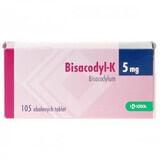
Out of stock













Description Bisacodyl
The information in the FAQ section was created by the Liki24.nl team and is based on the official manufacturer's manual
Bisacodyl is a locally acting laxative known for its essential role in relieving constipation and facilitating bowel movements. This active substance, through mechanisms that stimulate peristaltic contractions in the colon, helps to achieve a proper stool consistency without negatively affecting digestion or nutrient absorption in the small intestine.
Forms of release
Bisacodyl is available in the form of 5 mg gastroresistant tablets, which are designed to resist the acidic environment of the stomach and dissolve in the colon, thus ensuring effective and timely action.
This formulation is essential to prevent premature degradation of the active substance, ensuring that the laxative effect occurs exactly in the desired area of the digestive tract.
Indications for use
Bisacodyl is mainly used to treat acute functional constipation and is particularly effective in special situations, such as travelling, changes in routine or lifestyle.
It is also useful in facilitating bowel emptying before surgery or diagnostic procedures, such as endoscopies or X-rays.
This medicine can also be used in immobilised patients or those undergoing opioid treatment, who are prone to severe constipation.
Dosage
The dosage regimen varies depending on age and purpose of use.
Adults and children over 10 years of age may take 1-2 tablets (5-10 mg) before bedtime. It is recommended to start with the minimum dose of 1 tablet, and if necessary, the dose may be adjusted up to a maximum of 2 tablets per day.
For children aged 2 to 10 years, the usual dose is 1 tablet (5 mg) per day, taken at bedtime. It is important to note that bisacodyl should not be used for more than one week without consulting a doctor.
Contraindications
Bisacodyl is contraindicated in certain medical conditions, including hypersensitivity to the active substance or excipients, intestinal obstruction, ileus or acute surgical abdomen.
Also, patients with severe associated conditions, such as severe dehydration or unexplained abdominal pain, should avoid taking it, highlighting the need for medical advice before use.
Special instructions
Bisacodyl should always be used under medical supervision, especially in patients with pre-existing conditions or those requiring long-term administration.
Important! It is important that laxatives are only used for short periods, as chronic use can lead to electrolyte imbalances and laxative dependence.
Side effects
Like all medicines, Bisacodyl can cause side effects. The most common effects include abdominal cramps, stomach pain, diarrhoea and nausea.
Less commonly, dizziness, blood in the stool or discomfort in the rectal area may occur.
Dizziness and fainting may also be associated with constipation itself rather than with the use of Bisacodyl, thus highlighting the importance of contextual assessment of symptoms.
Interactions with other medicines and food
The use of Bisacodyl may interfere with the effectiveness of other medicines. It is important that patients inform their doctor about any other medicines they are taking, as there is a risk of reducing their effect. For example, Bisacodyl may interact with anticoagulants, isoniazid or cardiac glycosides.
An interval of at least 1 hour should be observed between taking Bisacodyl and consuming dairy products or antacids, and 2 hours for other medicines.
Overdose
Overdose with Bisacodyl may lead to severe symptoms, including chronic diarrhoea, abdominal cramps, electrolyte imbalances and kidney complications. Patients should be aware of these risks and contact a specialist immediately if they suspect an overdose.
Storage conditions
Bisacodyl should be stored in a dry place, away from moisture and at a temperature not exceeding 25°C. Patients should also be aware of the expiry date marked on the packaging and should not use the medicine after this date. Keep out of the reach of children.
Specialised literature used
FREQUENTLY ASKED QUESTIONS
Is Bisacodyl safe for long-term use?
Can I use Bisacodyl during pregnancy or while breastfeeding?
What should I do if I forget a dose of Bisacodyl?
Features
| Category | Over-the-Counter medicines (OTC), Digestive Diseases, Constipation |
| ATC code 1 | A06AB02 |