
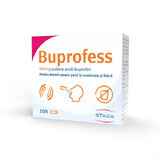
Buprofess 400 mg, 10 plicuri, Stada
Stada
Cont

 Cod promoțional APP3 – 3 € reducere la prima comandă în aplicație
 Livrare gratuită pentru comenzi de peste 49 €












Informațiile din secțiunea Întrebări și răspunsuri au fost create de echipa Liki24.nl și se bazează pe prospectul oficial al producătorului.
Buprofess este un medicament analgezic și antipiretic pe bază de ibuprofen, aparținând clasei antiinflamatoarelor nesteroidiene, destinat tratamentului simptomatic pe termen scurt al durerii ușoare până la moderate și al febrei, la copii, adolescenți și adulți, în funcție de concentrația utilizată. Buprofess, comercializat de Stada, se remarcă printr-un profil farmacologic bine cunoscut și printr-o biodisponibilitate rapidă, caracteristică formulărilor orale moderne de ibuprofen.
Buprofess este disponibil sub formă de pulbere orală aromatizată cu lămâie, ambalată în plicuri monodoză, ușor de administrat direct pe limbă, fără apă.
Există două concentrații distincte, 200 mg sau 400 mg, adaptate diferitelor categorii de vârstă și greutate corporală. Această diferențiere permite o dozare precisă și sigură, adaptată nevoilor clinice individuale.
Buprofess este indicat în tratamentul simptomatic pe termen scurt al durerii ușoare până la moderate, incluzând cefalee, dureri dentare, dureri musculare, dureri post-traumatice minore sau dismenoree, precum și în tratamentul febrei, indiferent de etiologie.
La copii și adolescenți, produsul este utilizat în principal pentru controlul febrei și al durerilor asociate infecțiilor acute, cu respectarea strictă a limitelor de vârstă și greutate. La adulți, Buprofess reprezintă o opțiune eficientă pentru ameliorarea simptomelor dureroase și febrile, cu condiția utilizării pe perioade scurte și în doze minime eficace.
Ibuprofenul, substanța activă, exercită efecte analgezice, antipiretice și antiinflamatoare prin inhibarea reversibilă a ciclooxigenazelor, enzime implicate în sinteza prostaglandinelor, mediatori cheie ai inflamației, durerii și febrei.
Dozajul Buprofess este stabilit în funcție de greutatea corporală, vârstă și severitatea simptomelor.
Pentru Buprofess 200 mg, la copii cu greutatea între 20–29 kg se administrează un plic per doză, cu un maxim de 600 mg pe zi, iar la cei cu greutatea între 30–39 kg, doza zilnică maximă este de 800 mg. Adolescenții și adulții pot primi 200–400 mg per doză, fără a depăși 1200 mg pe zi.
Buprofess 400 mg este indicat adolescenților și adulților cu greutatea peste 40 kg, doza uzuală fiind de 400 mg per administrare, cu un maxim zilnic de 1200 mg. Intervalul dintre doze trebuie să fie de minimum 6 ore.
Buprofess este contraindicat la pacienții cu hipersensibilitate la ibuprofen sau la alte antiinflamatoare nesteroidiene, precum și la cei cu antecedente de reacții alergice severe induse de acid acetilsalicilic.
De asemenea, nu trebuie administrat în caz de ulcer gastric sau duodenal activ, hemoragii gastrointestinale, insuficiență hepatică, renală sau cardiacă severă, tulburări de coagulare sau hemoragii active.
Utilizarea este contraindicată în trimestrul al treilea de sarcină și la pacienții cu deshidratare severă.
Prudența este necesară la pacienții cu antecedente de boli gastrointestinale, afecțiuni cardiovasculare, hipertensiune arterială, diabet zaharat, dislipidemie sau la fumători. La pacienții vârstnici, riscul de reacții adverse este crescut, motiv pentru care se recomandă monitorizare atentă.
Utilizarea prelungită necesită monitorizarea funcției renale, hepatice și a hemoleucogramei.
Cele mai frecvente reacții adverse sunt de natură gastrointestinală, incluzând arsuri epigastrice, dureri abdominale, greață, vărsături sau diaree. Mai rar pot apărea ulcere gastrointestinale, sângerări, tulburări ale sistemului nervos central, precum amețeli sau cefalee, și reacții cutanate alergice.
Reacțiile adverse severe, deși rare, includ insuficiență renală, reacții cutanate grave de tip sindrom Stevens–Johnson, evenimente cardiovasculare sau reacții anafilactice, necesitând întreruperea imediată a tratamentului și evaluare medicală.
Buprofess poate interacționa cu unele medicamente precum anticoagulantele orale, glucocorticoizii, antiplachetarele, inhibitorii selectivi ai recaptării serotoninei, diureticele, antihipertensivele, litiul, metotrexatul și anumite antibiotice chinolone.
Consultați prospectul medicamentului pentru lista completă de interacțiuni medicamentoase.
Supradozajul cu Buprofess se poate manifesta prin greață, vărsături, dureri abdominale, somnolență, amețeli, convulsii, hipotensiune arterială sau deprimare respiratorie.
Nu există antidot specific, iar tratamentul este simptomatic și de susținere, motiv pentru care este esențială prezentarea imediată la medic.
Buprofess trebuie păstrat în ambalajul original, la temperaturi sub 25°C, ferit de lumină și umiditate. Medicamentul nu trebuie utilizat după data de expirare și trebuie ținut departe de vederea și îndemâna copiilor.
Tratamentul cu Buprofess nu trebuie să depășească 3 zile pentru febră și 4 zile pentru durere la adulți, respectiv 3 zile la copii și adolescenți, fără aviz medical.
Consumul de alcool în timpul tratamentului cu Buprofess nu este recomandat, deoarece poate crește riscul de iritație gastrică, ulcer și sângerări digestive. Asocierea cu alcool poate accentua și reacțiile adverse la nivelul sistemului nervos central, precum amețeala sau somnolența.
Administrarea Buprofess este contraindicată în trimestrul al treilea de sarcină și se face cu prudență în primele două trimestre. În alăptare, utilizarea pe termen scurt este considerată, în general, sigură.
| Categoria | Medicamente fără Rețetă (OTC), Antiinflamatorii și Analgezice, Dureri de cap, Dureri menstruale |
| Brand | Stada |
| Tip produs | Plicuri |
| Codul АТC 1 | M01AE01 |