
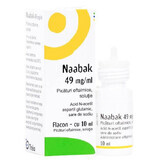
Naabak picaturi oftalmice, 10ml, Thea
Thea
Cont

 Cod promoțional APP3 – 3 € reducere la prima comandă în aplicație
 Livrare gratuită pentru comenzi de peste 49 €











Informațiile din secțiunea Întrebări și răspunsuri au fost create de echipa Liki24.nl și se bazează pe prospectul oficial al producătorului.
Naabak este un medicament antialergic oftalmic formulat pentru a reduce și controla simptomatologia oculară determinată de reacțiile alergice, precum conjunctivitele și blefaroconjunctivitele de etiologie alergică, frecvent întâlnite în rinită alergică sezonieră, expunere la alergeni oculari sau forme cronice.
Compoziția sa pe bază de acid N-acetil aspartil glutamic, sare de sodiu, îi conferă un profil farmacologic bine definit, orientat către stabilizarea reacțiilor alergice locale și ameliorarea manifestărilor precum pruritul ocular, hiperemia conjunctivală, lăcrimarea excesivă și senzația de corp străin.
Naabak se prezintă sub formă de picături oftalmice, soluție 49 mg/ml, ambalate în flacoane de 10 ml prevăzute cu picurător. Forma farmaceutică este concepută pentru instilare oculară precisă și asigură o administrare controlată.
Soluția este limpede, sterilă și formulată fără conservanți, pentru a minimiza riscul iritațiilor și al reacțiilor adverse locale.
Naabak este recomandat pentru tratamentul simptomelor oculare de origine alergică, în special:
Medicamentul nu înlocuiește tratamentul etiologic al alergiei, dar reduce manifestările locale prin stabilizarea reacțiilor conjunctivale, îmbunătățind confortul ocular și calitatea vieții pacienților. În formele severe sau recidivante, utilizarea sa necesită evaluare medicală suplimentară.
Doza recomandată pentru adulți și copii peste 4 ani este de 1 picătură instilată în sacul conjunctival al fiecărui ochi, de 2–6 ori pe zi, în funcție de severitatea simptomelor.
Administrarea se va efectua cu respectarea normelor elementare de igienă: spălarea pe mâini, evitarea contactului vârfului picurătorului cu ochiul sau pleoapele și închiderea flaconului imediat după utilizare.
Tratamentul trebuie continuat pe întreaga durată a expunerii la alergen, chiar dacă manifestările se atenuează.
Administrarea Naabak este contraindicată în următoarele situații:
De asemenea, medicamentul nu trebuie ingerat sau injectat – fiind destinat strict uzului ocular local.
În timpul instilării, pacientul trebuie să evite atingerea ochiului cu vârful flaconului pentru a preveni contaminarea soluției.
Pacientul nu trebuie să depășească doza recomandată și nu trebuie să întrerupă tratamentul fără recomandarea medicului, mai ales în perioadele de risc crescut.
Naabak este foarte bine tolerat, însă, ca orice medicament, poate produce reacții adverse, de regulă ușoare și tranzitorii:
Dacă apar reacții mai intense, neobișnuite sau persistente, se recomandă întreruperea tratamentului și prezentarea la medic.
Nu au fost raportate interacțiuni sistemice semnificative, deoarece absorbția oculară este minimă.
Totuși, dacă pacientul folosește și alte picături oftalmice – antihistaminice, lubrifianți, vasoconstrictoare sau antiinflamatoare – trebuie respectat intervalul de minimum 15 minute între instilări.
Supradozajul este improbabil datorită formei farmaceutice. Dacă totuși se administrează excesiv, apar cel mult iritații locale ușoare. În această situație, se recomandă clătirea ochilor cu ser fiziologic steril și monitorizarea simptomelor.
A se păstra la temperaturi sub 25°C. A nu se lăsa la îndemâna copiilor. A nu se congela. A se păstra în ambalajul original, ferit de contaminare și lumină. Nu utilizaţi acest medicament după data de expirare înscrisă pe ambalaj. A se utiliza în cel mult 3 luni după deschidere.
Flacoanele nefolosite sau expirate trebuie eliminate conform recomandărilor farmacistului, evitând aruncarea lor în apa menajeră, pentru protecția mediului.
Administrarea în sarcină și alăptare se face numai cu acordul medicului, deoarece nu există suficiente date privind siguranța utilizării în aceste perioade. Evaluarea beneficiilor și riscurilor este individuală.
Datorită faptului că produsul nu conține conservanți, poate fi utilizat de persoanele care poartă lentile de contact, dar se recomandă, în mod ideal, instilarea picăturilor înainte de aplicarea lentilelor sau în pauze, pentru a evita senzația tranzitorie de disconfort.
Da, puteți conduce vehicule după administrare, însă doar după ce dispare eventuala încețoșare temporară a vederii care poate apărea imediat după instilarea picăturilor. Dacă tulburările vizuale persistă și nu vedeți clar, amânați condusul până la remiterea completă a simptomelor.
| Categoria | Medicamente fără Rețetă (OTC), Afecțiuni oculare |
| Brand | Thea |
| Tip produs | Picături |
| Codul АТC 1 | S01GX03 |
Evaluarea medie este 5.0 pe baza 1 recenzii

.Produsul este pentru cei care suferă de conjunctivită (mâncărime în zona ochilor). Folosit zilnic, sau chiar de două ori pe zi, atenuează senzațiile neplăcute.Este mai eficient decât Nostamine!

.Produsul este pentru cei care suferă de conjunctivită (mâncărime în zona ochilor). Folosit zilnic, sau chiar de două ori pe zi, atenuează senzațiile neplăcute.Este mai eficient decât Nostamine!